






Logo

Turkey - Grupo D

Turkey arrives with scars, punch and a group that invites belief

🇹🇷 Turkey arrives with scars, punch and a group that invites belief

From a demanding qualifying group to a play-off route settled with composure, Turkey earned its place through goals, nerve and a finish that says more than the table alone.

Introducción

Turkey’s ticket to the World Cup was not signed with a flourish of comfort, but with the kind of campaign that leaves a team marked in useful ways. There were open games, stretches of bold attacking football, one heavy blow that forced a reaction, and a final sequence that revealed something important: this side can absorb a setback, reorder itself and come back with force. That matters in tournament football, where memory is short and the next match arrives before the previous one has finished echoing.

There is also a rhythm to Turkey’s road that makes it easy to picture. A sharp away win in Tbilisi, a brutal collapse against Spain, then a response with goals and authority. It was not a straight line, and that is precisely why the campaign feels real. Turkey did not drift into the World Cup; it had to wrestle its way there, first through the group and then through a play-off path with no margin for distraction.

The hard numbers give shape to that journey. Turkey finished second in Group E with 13 points from 6 matches, collecting 4 wins, 1 draw and 1 defeat. The attack was productive, with 17 goals scored, while the defense allowed 12, leaving a goal difference of +5. That split tells the story of a team capable of hurting opponents in clusters, but also one that rarely travels through a qualifying phase without some turbulence.

Three turning points stand out immediately. On 4 September 2025, Turkey opened the group stretch with a 3-2 away win over Georgia, surviving a game that stayed alive until deep into stoppage time. On 7 September 2025 came the night that bent the whole narrative: a 0-6 home loss to Spain in Konya, the kind of result that can either break a campaign or harden it. Turkey chose the second path. The reaction arrived on 11 October 2025 with a 6-1 away demolition of Bulgaria, and the group phase closed on 18 November 2025 with a 2-2 draw away to Spain, a result that did not win the group but did restore competitive balance against its strongest rival.

Those swings are essential to understanding the team. Turkey was not the cleanest side in the section, and certainly not the most stable. Spain’s 16 points and +19 goal difference made that clear. But Turkey’s 13 points were built on something tangible: it beat the teams it needed to beat, it scored heavily when spaces opened, and when qualification required another round, it handled the pressure with a steadier pulse than many expected.

El camino por Eliminatorias

UEFA qualifying in this case produced a direct World Cup place for the group winner, while the runner-up moved on to the play-offs. Turkey’s group phase therefore had a simple competitive logic but a difficult practical demand: either keep pace with Spain, or secure second place strongly enough to extend the road. Turkey did the latter. Its 13 points left it three behind Spain and ten ahead of both Georgia and Bulgaria, who each finished on 3. The gap downward was comfortable; the gap upward was decisive.

The full table matters because it frames Turkey’s campaign properly. This was not a photo finish for second. Turkey clearly separated itself from the lower half of the group, and it did so with an attack that produced 17 goals in 6 matches, second only to Spain’s 21. The problem was defensive control. Turkey conceded 12, while Spain allowed only 2. That defensive contrast explains the final order better than any single result. Turkey could overwhelm opponents, but it could also leave matches too open for too long.

Its record across the six games was forceful in bursts. The away win against Georgia came 3-2, with Mert Müldür scoring early and Kerem Aktürkoğlu striking twice. That was followed by the 0-6 defeat to Spain, the campaign’s clear low point. Yet Turkey answered with consecutive wins over Bulgaria and Georgia, scoring 10 goals across those two matches before adding a 2-0 home win over Bulgaria. By the time it reached Seville for the last group game, the table position was effectively shaped: Turkey needed a result of prestige and proof more than rescue, and the 2-2 draw delivered both.

Table of Turkey’s qualifying matches

Date Round or Group Opponent Venue status Result Scorers Stadium
4 September 2025 Group E Georgia Away Turkey 3-2 win Müldür 3', Aktürkoğlu 41', 52' Boris Paichadze Stadium, Tbilisi
7 September 2025 Group E Spain Home Turkey 0-6 loss Konya Büyükşehir Stadium, Konya
11 October 2025 Group E Bulgaria Away Turkey 6-1 win Güler 11', Popov own goal 49', Yıldız 51', 56', Çelik 65', Kahveci 90+3' Vasil Levski National Stadium, Sofia
14 October 2025 Group E Georgia Home Turkey 4-1 win Yıldız 14', Demiral 22', 52', Akgün 35' Kocaeli Stadium, İzmit
15 November 2025 Group E Bulgaria Home Turkey 2-0 win Çalhanoğlu 18' pen., Chernev own goal 83' Metropolitan Municipality Stadium, Bursa
18 November 2025 Group E Spain Away Turkey 2-2 draw Gül 42', Özcan 54' La Cartuja Stadium, Seville

Table of positions

Group Pos. Team Pts. MP W D L GF GA GD Qualification
E 1 Spain 16 6 5 1 0 21 2 +19 World Cup 2026
E 2 Turkey 13 6 4 1 1 17 12 +5 play-offs
E 3 Georgia 3 6 1 0 5 7 15 −8 Not qualified
E 4 Bulgaria 3 6 1 0 5 3 19 −16 Not qualified

A numerical reading sharpens the picture. Turkey took 7 of 9 possible points at home, but the home record is split emotionally in two by the Spain defeat. Away from home, it took 6 of 9 points and scored 11 goals, which suggests a side more than comfortable playing in transition and attacking space. Across the six group matches, Turkey scored at least two goals in five of them. That is the profile of a team with enough offensive volume to survive mistakes, right up until the opponent is strong enough to punish every loose moment.

The margins are also revealing. Two of Turkey’s matches were decided by a single goal, one ended level, and the other three became wide-scoreline games. That combination is unusual but instructive. Turkey could grind when necessary, as seen in the 1-0 play-off semifinal that came later, but in the group phase it often lived in emotionally expensive matches: 3-2, 6-1, 4-1, 2-2. This is not a team that spent qualifying in a low-event bubble.

Then came the second act. Finishing second sent Turkey into the UEFA play-offs, and here the campaign changed tone. The group phase had been loud, with goals everywhere and one major collapse. The play-off route demanded something colder. One poor half could erase months of work. Turkey entered that bracket knowing exactly why it was there: good enough to separate from Georgia and Bulgaria, not clean enough to take first from Spain.

The play-off path itself was short and severe. In the semifinal on 26 March 2026, Turkey hosted Romania in Istanbul and won 1-0. There was no avalanche of chances reflected in the scoreline, no room for decorative football. It was the kind of result that says the team understood the assignment. Four days later, on 31 March 2026, Turkey went to Pristina for the final against Kosovo and won 1-0 again. That pair of scorelines may be the most important evidence in the whole file. After a group phase in which Turkey conceded 12 in 6 matches, it closed qualification by keeping consecutive clean sheets in knockout football.

There is a broader story inside that transition. The group campaign suggested a team that could score in bursts but might struggle to control emotional tempo. The play-offs showed the opposite face: measured, practical, comfortable winning narrow. That does not erase the defensive concerns from the earlier phase, but it does suggest growth. More importantly, it suggests adaptability. Turkey did not try to replay October in March. It changed the method and got over the line.

Play-off matches

Route Stage Date Venue Home Result Away
UEFA 3 Semifinal 26 March 2026 Bratislava Slovakia 3-4 Kosovo
UEFA 3 Semifinal 26 March 2026 Istanbul Turkey 1-0 Romania
UEFA 3 Final 31 March 2026 Pristina Kosovo 0-1 Turkey

One last statistical split completes the qualifying portrait. In the six group matches, Turkey scored 17 and conceded 12. In the two play-off wins, it scored 2 and conceded 0. That contrast is too sharp to ignore. It points to a team that learned, or at least accepted, that qualification is not always about expressing its best football. Sometimes it is about reducing the match to one decisive moment and protecting it. For a national side heading into a World Cup group stage, that lesson may be worth as much as the goals that first kept the campaign alive.

Cómo juega

Turkey’s identity, judged only from these results, begins with initiative. This is a team that likes games to move, and when it can strike early or pull an opponent into exchanges, it becomes dangerous quickly. The evidence is clear in the scorelines: 3-2 away to Georgia, 6-1 away to Bulgaria, 4-1 at home to Georgia. In those three matches alone, Turkey scored 13 goals. That kind of output does not happen by accident. It reflects a side willing to attack with numbers, or at the very least one comfortable accelerating a game instead of slowing it down.

The second trait is its dependence on rhythm. When Turkey finds it, goals come in clusters. Against Georgia away, it scored in the 3rd, 41st and 52nd minutes. Against Bulgaria away, it piled on after halftime, turning the match into a runaway. Against Georgia at home, it had the game largely shaped by the 35th minute and added another after the break. This pattern matters. Turkey is not merely a team that scores; it is a team that can turn a balanced game into a tilted one inside short stretches.

The distribution of goals also points away from total dependence on one scorer. Aktürkoğlu had a brace in Tbilisi, Yıldız scored twice in Sofia, Demiral struck twice against Georgia, and other goals came from Müldür, Güler, Çelik, Kahveci, Akgün, Çalhanoğlu, Gül and Özcan, plus own goals forced from opponents. That spread suggests an attack with several entry points. The danger can arrive from different names and different match contexts. For opponents, that is useful complexity; for Turkey, it reduces the risk of one cold spell freezing the whole front line.

But the vulnerabilities are just as visible. Turkey conceded in four of its six group matches and allowed 12 goals overall, an average of 2 per game. Strip out the two matches against Bulgaria and the number still feels uncomfortable because the Spain damage was extreme and the Georgia games were never entirely quiet. The 0-6 loss at home to Spain is the clearest warning: when control slips, the punishment can become severe. Even the opening win over Georgia remained alive until 90+8, when the hosts scored again. Turkey won, but it did not close the door early enough.

There is also a tension between openness and efficiency. Turkey’s best attacking displays came in matches where the scoreboard widened. Yet the play-offs hinted that the side can function differently, winning 1-0 twice with qualification on the line. That could be read as tactical maturity, but from this evidence alone it is safer to call it situational intelligence. Turkey seems most comfortable when the game opens, but it has shown that it can survive a tighter script if required.

In practical terms, that means Turkey’s World Cup matches may hinge on game state. If it scores first, especially against a side willing to trade attacks, it can become lively and difficult to handle. If it falls behind or loses structure, the game may tilt too fast in the other direction. The team’s ceiling is attractive because the goals are real; the team’s risk is equally real because the defensive floor has dropped badly at least once. That combination makes Turkey compelling and dangerous, but not entirely predictable.

El Grupo en el Mundial

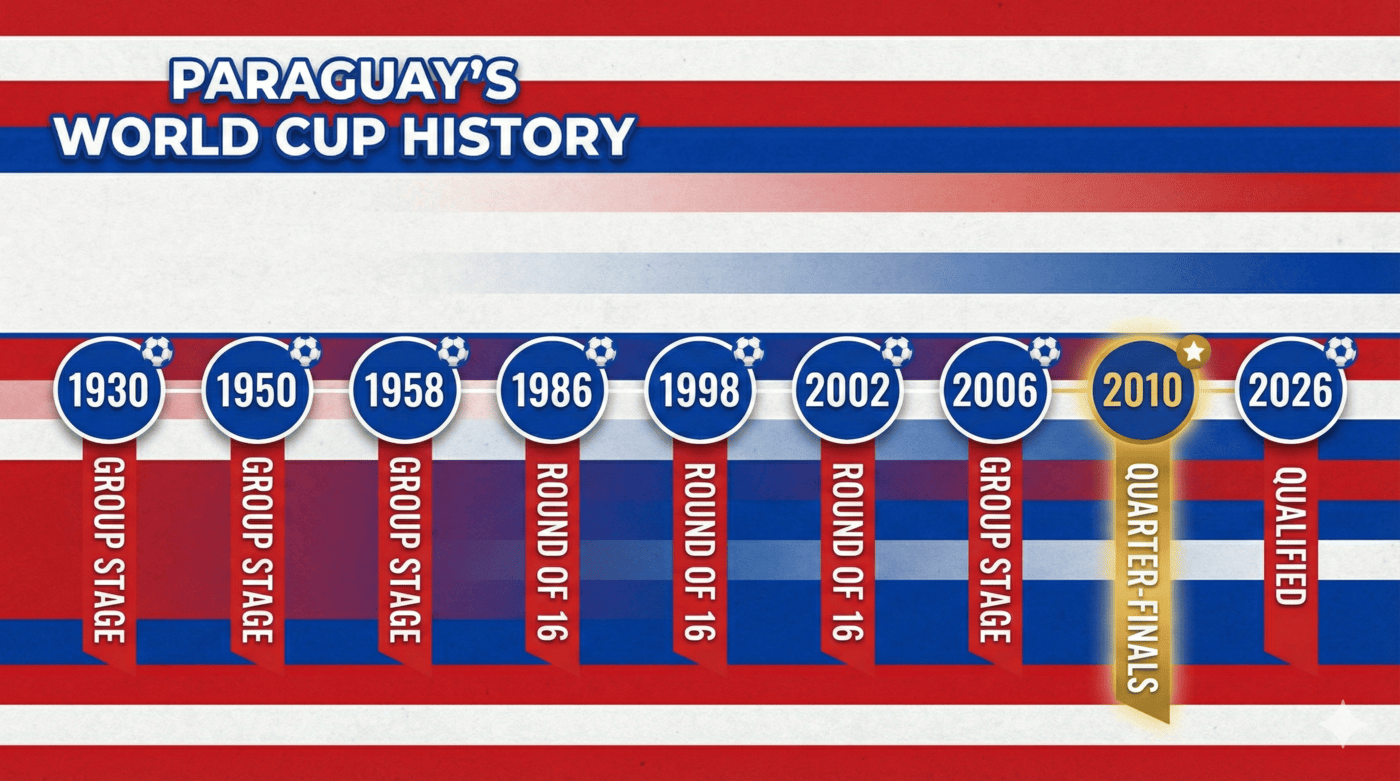
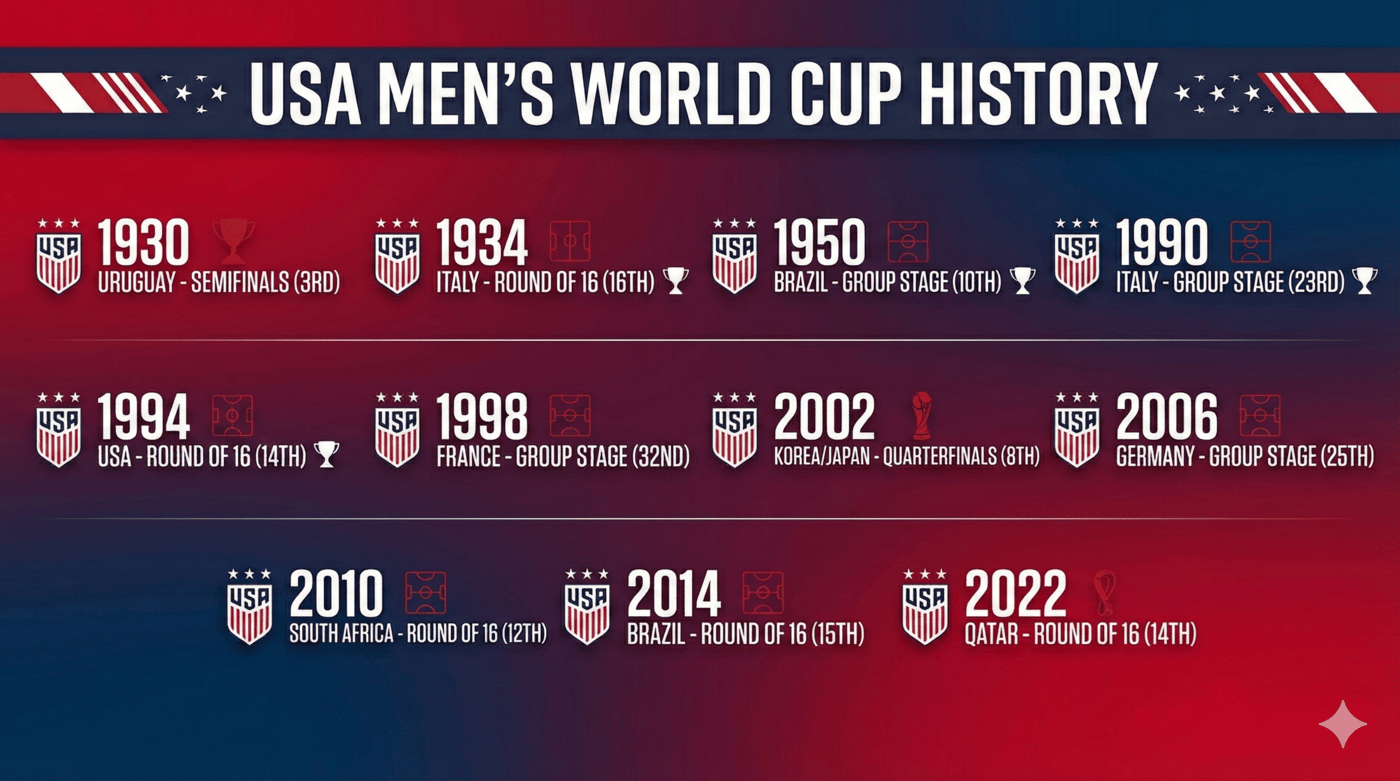
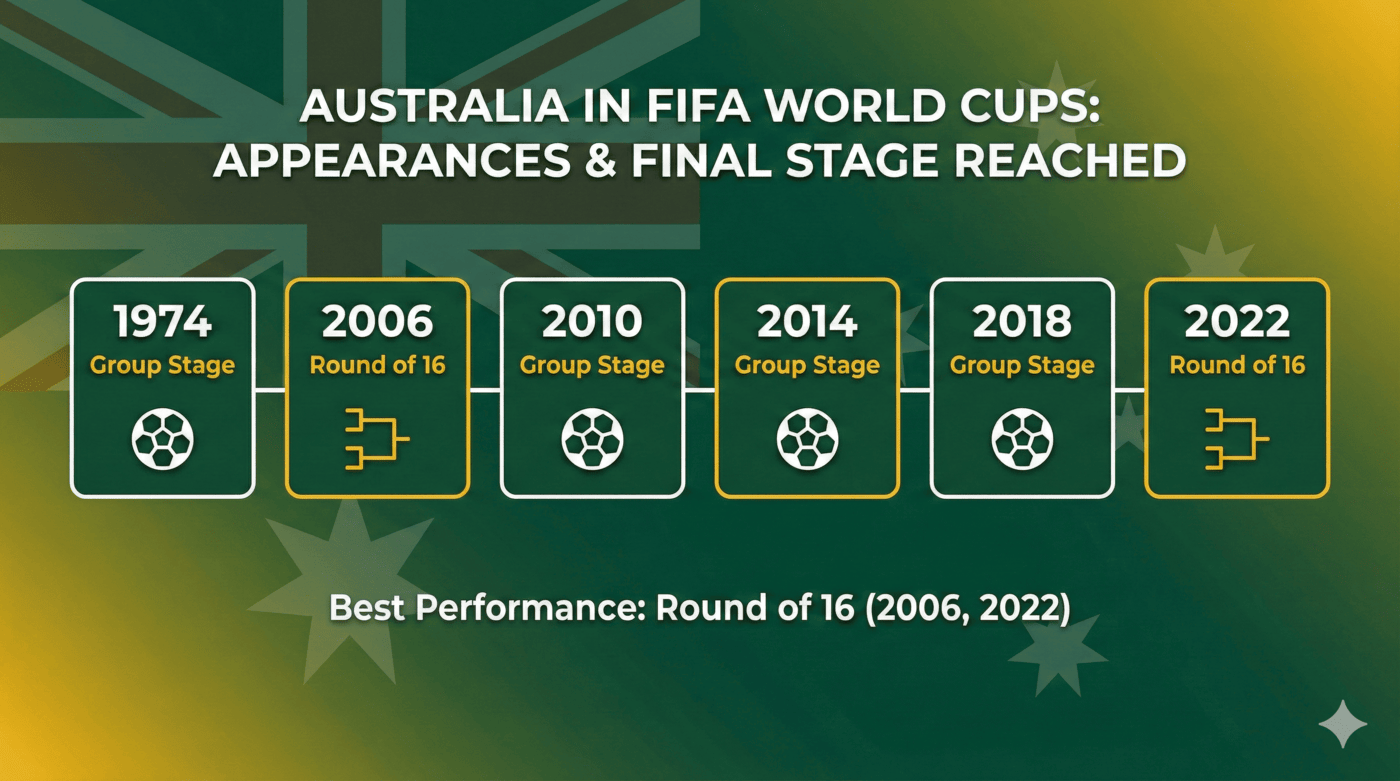
Turkey lands in Group D, where the schedule gives it a varied opening: Australia first, then Paraguay, then the United States. The sequence matters. It begins with a match that can shape the emotional tone of the whole group, moves into a second game that may define the realistic route to the round of 32, and closes against the host nation in Los Angeles. There is no dead air in this group. Every match carries immediate consequence.

The three fixtures are clearly spaced and geographically distinct: Vancouver, San Francisco and Los Angeles. That west-coast run offers a certain continuity of environment, but the football questions change from one match to the next. Turkey will need a sharp start, then composure, then enough resilience to handle the closing game without table anxiety becoming the main opponent.

World Cup group matches

Date Stadium City Opponent
13 June 2026 BC Place Stadium Vancouver Australia
19 June 2026 Levi's Stadium San Francisco Paraguay
25 June 2026 SoFi Stadium Los Angeles United States

The opener against Australia looks like the match where Turkey most needs clarity rather than brilliance. Opening games can become sticky, and Turkey’s qualifying record shows two opposite possibilities: it can begin fast and create momentum, or it can allow the match to stay too open. This feels like a game to impose conditions early, without turning it chaotic. If Turkey manages the emotional temperature well, its attacking variety gives it a real chance to start with three points. Plain-language prediction: Turkey wins.

The second match against Paraguay carries the shape of a scoreboard match, the kind that can compress a group. Turkey’s qualification path suggests a team that can attack effectively against opponents outside the elite tier, but also one that must be careful not to mistake possession of the ball for control of the game. If the first match is about setting the tone, the second is about not wasting the platform. This one reads like a tighter contest, with fewer spaces and more value in patience. Plain-language prediction: draw.

The third game against the United States in Los Angeles may arrive with qualification still live for both teams, and that alone changes the atmosphere. It is Turkey’s last group match, against the host nation, in a major stadium and with every detail likely magnified. From Turkey’s perspective, the challenge will be to avoid the kind of disorder that fed Spain’s big win in qualifying. If the match turns into a track meet, the risk rises. If Turkey can keep it in controlled phases and find moments through its spread of scorers, it has a path. Still, this looks like the most difficult of the three. Plain-language prediction: United States wins.

That leaves Turkey with a plausible route built on the first two games. Beat Australia, take something from Paraguay, and the final match may become a test of either consolidation or calculated ambition. What helps Turkey is that its own qualification story already includes both kinds of football: wide-open scoring nights and two disciplined 1-0 play-off wins. What hurts it is that the same file contains a defensive collapse severe enough to shadow every optimistic forecast.

The group therefore feels less like a puzzle of unknowns and more like a question of version. Which Turkey turns up? The free-scoring side that can hit four or six when the game opens? Or the restless side that can concede control and leave itself exposed? The answer may not be consistent across all three matches. In fact, Turkey’s best route may be to accept that each game demands a different register.

Keys to qualification

  • Start the group with points against Australia and avoid gifting the opener an emotional swing.
  • Carry the play-off discipline into the Paraguay match, where one goal may decide the whole shape of the evening.
  • Keep defensive distances shorter than they were in the group defeat to Spain.
  • Lean on the spread of scorers rather than waiting for one attacker to carry the offense alone.
  • Reach the final match against the United States with the table still under control.

Opinión editorial

Turkey arrives at this World Cup with a profile that is easier to respect than to summarize neatly. The group stage of qualifying showed its excesses: too many goals conceded, too much noise around the match, too many stretches where the game became a coin toss. But the play-offs showed something else, and perhaps something more valuable: a team capable of learning that not every must-win night needs to be loud. Two 1-0 wins, one at home to Romania and one away to Kosovo, are not glamorous results. They are adult results.

That is why Turkey feels like one of those teams nobody will be thrilled to meet once the tournament starts moving. It has enough goal threat to flip a match quickly, and just enough recent evidence of restraint to avoid being dismissed as reckless. The warning, though, is carved into one date and one scoreline: 7 September 2025, Turkey 0-6 Spain. If that level of defensive disconnection reappears against top-level opposition, the margin disappears immediately. If the lesson from that night truly stayed with this team, Turkey has the tools to make Group D uncomfortable for everyone.