

Logo

Czech Republic - Grupo A

Czech Republic arrives through fire and nerve to chase its World Cup chapter

🇨🇿 Czech Republic arrives through fire and nerve to chase its World Cup chapter

A campaign of sharp turns, heavy punches, and playoff composure carried Czech Republic from a strong qualifying run into a group that promises tension from the opening whistle.

Introducción

There are qualification campaigns that glide forward in a straight line, and then there are those that demand a different sort of character: the kind that has to be proven twice, once in the table and again under the pressure of knockout football. Czech Republic belongs to the second category here. Its route to the World Cup was not a polished parade. It was a sequence of good habits, hard reminders, and two playoff nights in Prague that asked for poise more than style.

At its best, this team moved with the certainty of a side that knows where the goals are. It won five of its eight group matches, scored 18 times, and finished with a goal difference of +10. That is the statistical spine of a team with enough punch to impose itself on the middle and lower tier of its section. But the numbers also reveal the friction points: eight goals conceded, two defeats, and a clear inability to dominate the group winner over two meetings.

The campaign swung on a few dates that shaped the whole story. On March 22, 2025, Czech Republic opened with a 2-1 home win over Faroe Islands, with Patrik Schick scoring twice, including the late second goal that prevented an awkward start from turning into a national headache. On June 9, 2025, the trip to Croatia produced the harshest scene of the group stage, a 5-1 defeat in Osijek that exposed every loose seam at once. And on October 12, 2025, the 2-1 loss away to Faroe Islands became the kind of result that leaves a mark: not just dropped points, but the feeling that direct qualification had slipped beyond reach.

Even so, the ending of the regular group phase kept Czech Republic alive and dangerous. The 2-0 away win in Montenegro on September 5 showed control and timing. The 0-0 draw at home against Croatia on October 9 at least restored some balance after the rout in Osijek. Then came the emphatic 6-0 win over Gibraltar on November 17, a closing act that did not change the final placement but did confirm something important: this side still had attacking breadth, still had energy, and still had enough conviction to carry itself into the playoff route without looking broken.

The final standing was clear. Czech Republic finished second in Group L with 16 points from 8 matches, behind Croatia on 22 and ahead of Faroe Islands on 12. The margin over the Faroese was comfortable enough on paper, but not so large that the campaign could be described as serene. Eighteen goals scored and eight allowed suggest a team with a healthy balance overall, yet several of those figures were shaped by extremes: six goals against Gibraltar in the finale, one brutal collapse against Croatia, and a costly defeat in Tórshavn. This was a qualification path with texture, not smoothness.

And that texture matters when trying to understand what kind of World Cup entrant Czech Republic is. Not a side carried by spotless dominance. Not a side overwhelmed by adversity either. Rather, one that had to learn how to survive its own imperfections, then validate itself again in March, when the playoff stage became the true finishing school of this campaign.

El camino por Eliminatorias

UEFA qualifying left little room for comfort. In this section, the format was simple and unforgiving at the top: the group winner claimed the direct World Cup place, while the runner-up moved on to the playoffs. Czech Republic operated inside that pressure from the moment Croatia established itself as the heavyweight of Group L. Once the Croatians began stacking wins, the Czech task changed subtly but decisively. First place remained the ambition, but second place became the floor that had to be protected at all costs.

That reading helps explain the campaign as a whole. Czech Republic closed with 16 points from 8 matches, collecting 5 wins, 1 draw, and 2 defeats. The attack delivered 18 goals, the defense conceded 8, and the +10 goal difference made it the clear second-best side in the section. Yet the gap to first place was six points, and that tells the central truth of the group: Czech Republic was good enough to separate itself from the chasing pack, but not consistent enough to dislodge Croatia.

The comparison with nearby rivals in the table adds useful detail. Faroe Islands finished third with 12 points and an unexpectedly solid +2 goal difference, which means Czech Republic did not stroll past its nearest challenger. Montenegro ended on 9 points, while Gibraltar lost all eight games. In other words, the Czech campaign was built exactly where it had to be built: by beating the teams below, especially Gibraltar and Montenegro, and avoiding too much damage in the head-to-head race around second place. The problem was that one of those protective walls cracked in Tórshavn, where Faroe Islands turned a 2-1 result into one of the defining shocks of the section.

The match list shows a team that started and ended with authority, but lived a rough middle chapter. It beat Faroe Islands 2-1, routed Gibraltar 4-0 away, then beat Montenegro 2-0 at home. That sequence looked like the opening of a direct-qualification contender. Then came the collision with Croatia, a 5-1 defeat that badly dented both the points total and the aura. The September recovery in Podgorica helped, as did the goalless home draw with Croatia in October, but the away loss to Faroe Islands prevented any late surge toward the top.

There is also a clear split between control and volatility. Against Gibraltar, the team scored ten goals across two matches and conceded none. Against Montenegro, it took six points from six and conceded zero. Against Croatia and Faroe Islands, the picture changed dramatically: one draw, two defeats, three goals scored, and seven conceded. That split is the map of the group. Czech Republic beat what it should beat often enough to finish second, but the matches that measured its ceiling either punished it or slipped away.

Below is the full match-by-match record from the regular qualifying phase.

Date Round or Group Opponent Venue status Result Goalscorers Stadium
March 22, 2025 Group L Faroe Islands Home Czech Republic 2-1 Faroe Islands Czech Republic: Schick 25', 85'; Faroe Islands: Vatnhamar 83' Malšovická aréna, Hradec Králové
March 25, 2025 Group L Gibraltar Away Gibraltar 0-4 Czech Republic Černý 21', Schick 50', Šulc 72', Kliment 90+5' Estadio Algarve, Faro-Loulé
June 6, 2025 Group L Montenegro Home Czech Republic 2-0 Montenegro Hložek 23', Schick 65' Doosan Arena, Pilsen
June 9, 2025 Group L Croatia Away Croatia 5-1 Czech Republic Croatia: Kramarić 42', 75', Modrić 62' pen., Perišić 68', Budimir 72' pen.; Czech Republic: Souček 58' Opus Arena, Osijek
September 5, 2025 Group L Montenegro Away Montenegro 0-2 Czech Republic Červ 3', Černý 90+6' Estadio Pod Goricom, Podgorica
October 9, 2025 Group L Croatia Home Czech Republic 0-0 Croatia No goals Eden Arena, Prague
October 12, 2025 Group L Faroe Islands Away Faroe Islands 2-1 Czech Republic Faroe Islands: Sørensen 67', Agnarsson 81'; Czech Republic: Karabec 78' Tórsvøllur, Tórshavn
November 17, 2025 Group L Gibraltar Home Czech Republic 6-0 Gibraltar Douděra 5', Chorý 18', Coufal 32', Karabec 39', Souček 44', Hranáč 51' Estadio Andrův, Olomouc

The table that framed that journey was equally revealing. Croatia’s 22 points and +22 goal difference left no debate about the group winner. Czech Republic’s 16 points secured second with room to spare, but not enough peace to avoid the playoff gate. Faroe Islands, with 12 points, stayed close enough to make every Czech stumble matter. This was not a campaign where the runner-up could coast.

Tabla de posiciones

Pos Team Pts MP W D L GF GA GD Status
1 Croatia 22 8 7 1 0 26 4 +22 World Cup 2026
2 Czech Republic 16 8 5 1 2 18 8 +10 Playoffs
3 Faroe Islands 12 8 4 0 4 11 9 +2 Not qualified
4 Montenegro 9 8 3 0 5 8 17 -9 Not qualified
5 Gibraltar 0 8 0 0 8 3 28 -25 Not qualified

A few numeric patterns sharpen the reading further. At home in the regular group phase, Czech Republic played four matches and went 3 wins, 1 draw, 0 defeats, scoring 10 and conceding 1. Away from home, it went 2 wins, 0 draws, 2 defeats, scoring 8 and conceding 7. That contrast says a lot. The side was reliable on its own soil, much less stable once the surroundings changed. Prague, Pilsen, Hradec Králové, and Olomouc offered a sense of order. Osijek and Tórshavn produced the campaign’s deepest bruises.

There is also an interesting split in match texture. Four of the eight regular qualifiers were decided by a single goal or ended level: 2-1 against Faroe Islands, 0-0 against Croatia, 2-1 loss to Faroe Islands, and arguably the game state against Montenegro was still delicate until the second goal. The team could grind, but it did not always seal matches early. On the other hand, it also showed the capacity to open the throttle against weaker opposition: 4-0 away to Gibraltar and 6-0 at home against the same opponent. That tells us Czech Republic had enough attacking resources to punish vulnerable teams, even if it was not always in full control against stronger or awkward opponents.

Then came the playoff chapter, and that chapter cannot be treated as a footnote, because it completed the qualification story. Finishing second in the group sent Czech Republic into the UEFA Route 4 playoff path. The task changed in nature. The league table was gone. Margin for error vanished. One bad half, one loose clearance, one cold penalty sequence could erase a year of work. Instead of collecting points, the team had to manage knockout tension in two matches, both staged in Prague after Denmark defeated North Macedonia in the other semifinal.

The semifinal on March 26, 2026 against Ireland was the first great test of nerve. Czech Republic did not cruise through it. The result, 2-2 and then 4-3 on penalties, says plenty on its own. This was not an evening of superiority; it was an evening of persistence. The team kept the tie alive, absorbed the strain of extra time, and survived the shootout. A campaign that had already shown uneven moments now required emotional control, and Prague delivered it.

Five days later, on March 31, 2026, the final against Denmark asked an even harder question. Again, Czech Republic did not settle the matter in 90 minutes. Again, the match ended 2-2. Again, the route to the World Cup had to pass through the tight corridor of penalties. This time the shootout was won 3-1. That is the signature of the playoff segment: not dominance, but composure under extreme pressure. Whatever doubts remained after the group phase, the team answered them with two survival performances in front of its own crowd.

That matters because playoffs do more than qualify a team; they reveal its emotional profile. Czech Republic did not simply appear in the World Cup by administrative extension of a decent group finish. It had to hold its breath twice and make the right decisions when the margin had disappeared completely. For a team whose regular campaign included a heavy defeat and an ugly stumble, that is a meaningful correction. The playoff route did not erase the flaws, but it proved the side could function in high-stress football.

Partidos de repechaje

Route Stage Date Venue Home Result Away
UEFA 4 Semifinal March 26, 2026 Copenhagen Denmark 4-0 North Macedonia
UEFA 4 Semifinal March 26, 2026 Prague Czech Republic 2-2 4-3 on penalties Ireland
UEFA 4 Final March 31, 2026 Prague Czech Republic 2-2 3-1 on penalties Denmark

Taken together, the qualifiers and the playoffs sketch a coherent football portrait. Czech Republic was strong enough to dominate the lower end of its group, solid enough at home to remain in control of second place, vulnerable enough away from home to miss direct qualification, and mentally robust enough to win two playoff shootouts. It reached the World Cup neither by accident nor by complete authority. It got there the hard way, which often leaves teams with a sharper sense of what they are.

Cómo juega

Judging strictly from the results, Czech Republic looks like a team that prefers practical control to spectacle, but can still widen a scoreline when the game allows it. The regular qualifying numbers support that. Eighteen goals in eight matches is a healthy average, and yet ten of those goals came in two matches against Gibraltar. That means the attack had bursts of abundance, but not constant overflow. Against the more demanding opponents in the group, chances appear to have been earned rather than gifted.

The first clue to its identity is that it tends to build from reliability at home. In four home qualifiers it conceded only once, and that goal arrived late against Faroe Islands in a game it still won 2-1. It also held Croatia to 0-0 in Prague, then beat Montenegro 2-0 and crushed Gibraltar 6-0. Those four matches form a clear pattern: when Czech Republic can settle the match in familiar surroundings, it usually imposes a cleaner rhythm, allows less, and carries the scoreboard with more authority.

The second clue is that the side does not always separate itself quickly, especially outside the easiest fixtures. The 2-1 home win over Faroe Islands needed Schick’s second goal in the 85th minute. The 2-0 away win in Montenegro included a very early opener from Červ and a very late second from Černý, which suggests a match that stayed alive for a long time. The away defeat in Faroe Islands also tells of a team that could not completely govern the flow once the match became choppy. In short, Czech Republic can manage games, but it does not always suffocate them.

The goal distribution offers another useful hint. Schick appears as the leading reference point in the match log, with decisive goals against Faroe Islands, Gibraltar, and Montenegro. Yet the scoring is not limited to one name. Černý, Šulc, Kliment, Hložek, Souček, Červ, Douděra, Chorý, Coufal, Karabec, and Hranáč all appear in the scoring record across the campaign. That is a significant spread. It suggests a team whose attack can arrive from different lines and different match contexts, not one chained to a single finisher every week. Even in the 6-0 against Gibraltar, six different players scored.

That diversity is one of the side’s strongest indicators going into a tournament group. A team with many occasional scorers can survive nights when its main striker is crowded out. It also points to set-piece value, second-line arrivals, and contribution from defenders or midfield runners, even without making any unsupported tactical claim. The results simply show that the Czech scoring map is broader than the usual one-man dependency.

Still, the vulnerabilities are visible too. The biggest one is exposure when the opponent raises both technical level and pressure. Croatia scored five in Osijek, and Faroe Islands turned an awkward away fixture into a damaging 2-1 Czech defeat. In the playoff stage, Ireland and Denmark both held Czech Republic to 2-2 draws before penalties. So even when the team advanced, it did not shut the door early. That points to a side that can compete, but one that leaves windows open.

Numerically, the warning signs are specific. In the eight regular qualifiers, Czech Republic kept four clean sheets, all against Montenegro, Gibraltar, and Croatia at home. But it conceded in all three matches that most disrupted the campaign: the 5-1 loss to Croatia, the 2-1 loss to Faroe Islands, and the nervy 2-1 win over Faroe Islands in the opener. That means trouble tends to arrive when the match becomes unstable rather than merely difficult. Once the rhythm breaks, the team can be dragged into exchanges it would rather avoid.

So how does Czech Republic seem to want to play, based on results alone? It looks like a side that seeks a manageable match: structured enough to prevent chaos, forceful enough to punish weaker rivals, and balanced enough at home to keep the game in front of it. It is less convincing in matches that become stretched or emotionally jagged. The playoff triumphs prove resilience, but the repeated need for penalties is also evidence that this team often operates on a narrow edge rather than from total command.

El Grupo en el Mundial

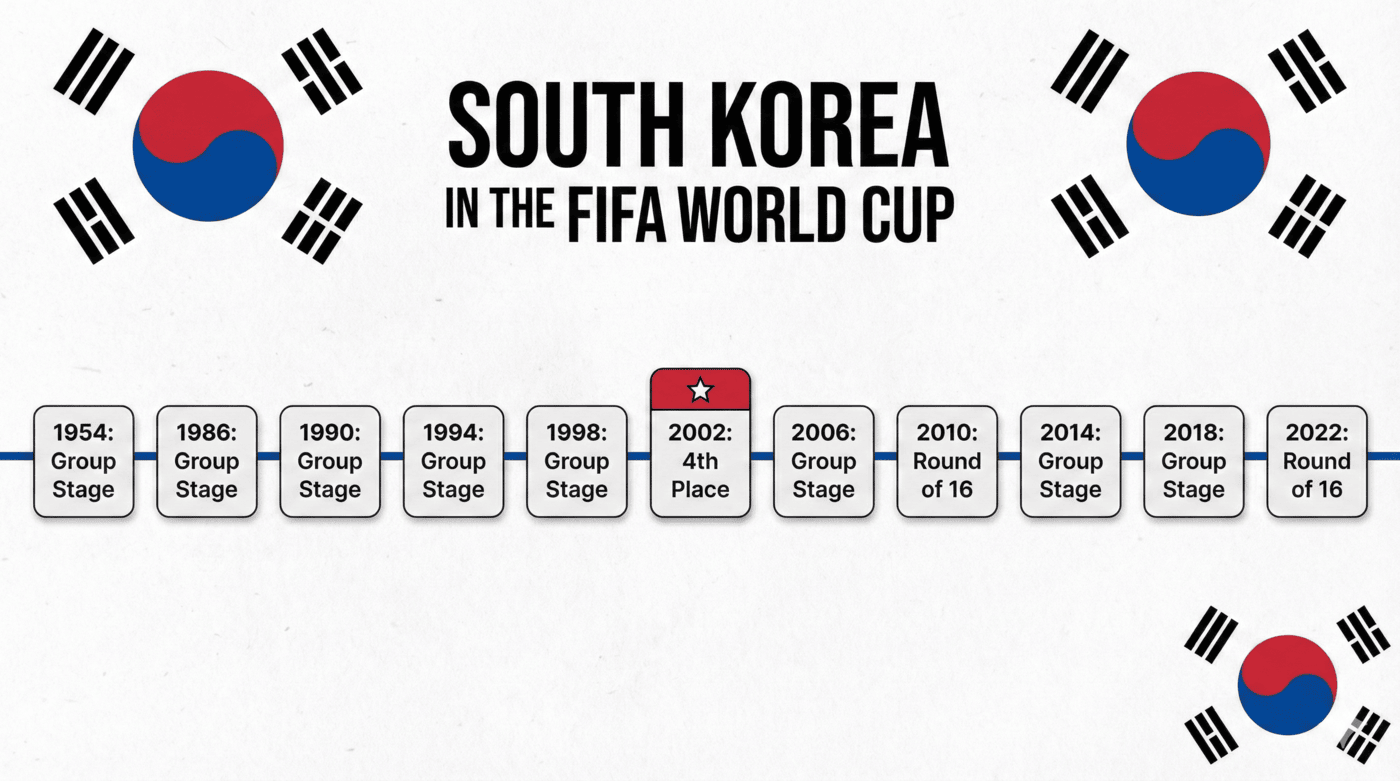
Czech Republic lands in Group A, where the three opponents are South Korea, South Africa, and Mexico. The schedule gives the campaign a clear shape. It begins on June 11, 2026 against South Korea in Guadalajara, continues on June 18 against South Africa in Atlanta, and closes on June 24 against Mexico at the Estadio Azteca in Mexico City. That sequence matters. The team opens with a game that could define the whole emotional register of the group, then moves to what looks like the most direct opportunity to seize points, before ending against the host nation in one of the tournament’s most charged settings.

Here is the full group-stage schedule for Czech Republic.

Date Stadium City Opponent
June 11, 2026 Estadio Chivas Guadalajara South Korea
June 18, 2026 Mercedes-Benz Stadium Atlanta South Africa
June 24, 2026 Estadio Azteca Mexico City Mexico

The opener against South Korea has the feel of a balance match. For Czech Republic, that means discipline first, impatience nowhere. The qualification record suggests this team can become uncomfortable when games turn loose, and opening fixtures often tempt exactly that kind of emotional overreach. The practical route would be to keep the score short, trust its broad distribution of scorers, and avoid giving the game a wild shape. Prediction: draw.

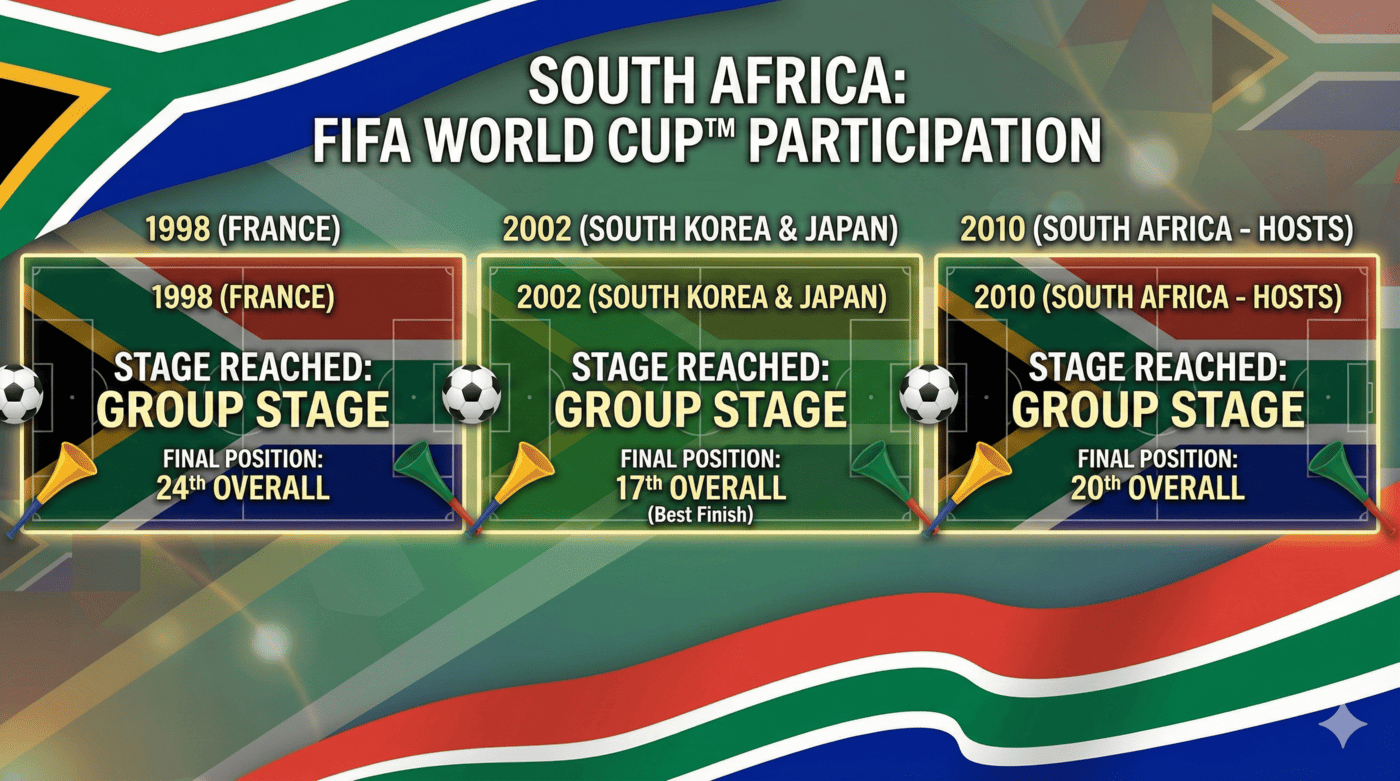
The second match against South Africa is the one that may invite Czech Republic to step forward more assertively. That does not mean a free-running game, because this Czech side has looked most convincing when it plays with control rather than abandon. But if there is a fixture in this group where it should aim to impose conditions, this is it. The balance of its qualification campaign suggests it is effective when allowed to settle into a measured rhythm and build pressure across the match. Prediction: Czech Republic wins.

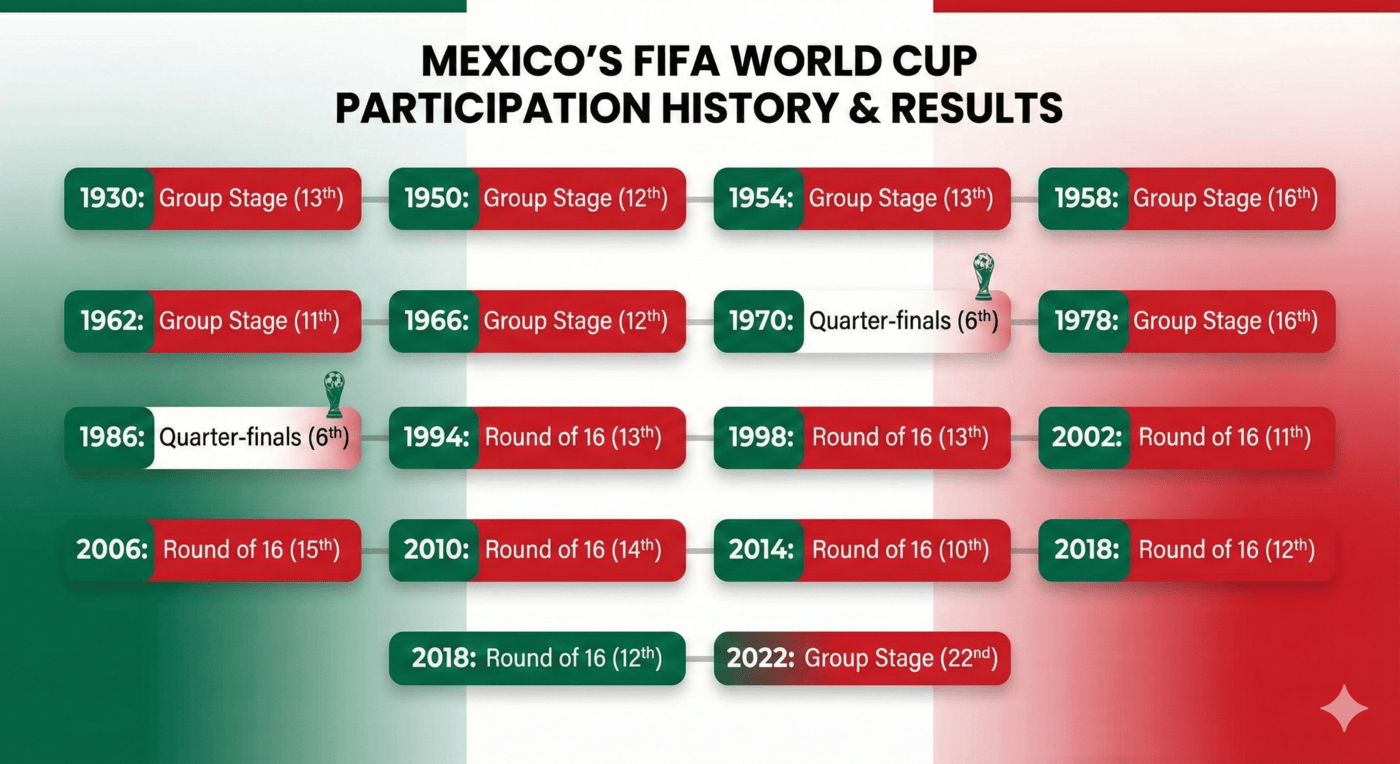
Then comes Mexico, and there is no need to decorate that challenge with clichés. The setting alone changes the tone: Estadio Azteca, final matchday, likely with qualification stakes alive. For Czech Republic, the key will be emotional economy. The group data from qualifying says this team can be sturdy at home and mentally alive in pressure moments, but it also says away environments and unstable game states have produced some of its worst football. This match threatens to combine both factors. Prediction: Mexico wins.

That set of forecasts would leave Czech Republic in a live battle for qualification deep into the group, which feels consistent with everything about its route here. This is not a team that arrives with the profile of a section favorite, nor one that should be dismissed as a placeholder. Its route through UEFA and then through the playoffs shows enough resilience to imagine a competitive group phase. But the margin is likely to be narrow, because narrow margins have defined much of the campaign already.

The strategic reading of the group is straightforward. The first match is critical because it can either give Czech Republic breathing room or force it into scoreboard debt before the closing stretch. The second is the one to turn into concrete points. The third may require a performance above the side’s average away standard. In other words, this is a group where the Czech team must make its order early, not chase it late.

Keys to qualification:

  • Start with at least a point against South Korea and avoid an opening defeat.
  • Turn the South Africa match into a controlled game, not a frantic one.
  • Protect defensive structure when the match state shifts after goals.
  • Keep using the spread of scorers rather than waiting for one player to rescue the attack.
  • Reach the Mexico match with the table still open and the goal difference intact.

Opinión editorial

Czech Republic reaches this World Cup in a way that says something honest about the team: it is neither ornamental nor overblown. It has enough football to compete, enough goals to matter, and enough emotional toughness to survive pressure. But it also carries a warning label from qualifying. Whenever the game slips from controlled to chaotic, the team starts to look more vulnerable than comfortable. That tension will travel with it into every group match.

If there is one lesson this squad must keep in its pocket, it comes from October 12, 2025 in Tórshavn. The 2-1 loss to Faroe Islands was not just a bad result; it was a reminder that a match can drift away from Czech Republic when it stops dictating the terms. At the World Cup, that kind of drift is usually punished without mercy. If this team can keep games tight, trust its collective scoring, and avoid giving the night away in scattered moments, it has a real chance to stay alive. If not, the tournament may begin to resemble Osijek more than Prague.