






Logo

Bosnia and Herzegovina - Grupo B

Fire, nerve and a long road to the World Cup

🇧🇦 Fire, nerve and a long road to the World Cup

Bosnia and Herzegovina reached the tournament through tension, resilience and a qualifying campaign that mixed authority, narrow margins and a playoff finish that demanded cold blood.

Introducción

Bosnia and Herzegovina did not travel the straight road. Its route to the World Cup had bends, moments of control, sudden jolts and a final stretch that tested temperament as much as football. This was not a side that swept everything aside from start to finish. It was a team that learned to live in tight games, to hold its nerve when the script got messy, and to keep enough conviction to stay standing when the group stopped being comfortable.

There is something revealing in the way this campaign unfolded. Bosnia and Herzegovina opened with an away win in Bucharest, then kept collecting points with the seriousness of a side that knew every small edge mattered. Later, the path became more jagged: a home defeat against Austria, a painful late equalizer away to Cyprus, and a playoff route that could have broken the mood of a less stubborn squad. Instead, it became the stage where this team showed its most durable trait: it rarely gave the game away emotionally.

The hard numbers anchor that feeling. Bosnia and Herzegovina finished second in Group H with 17 points from 8 matches, posting a record of 5 wins, 2 draws and 1 defeat. It scored 17 goals, conceded 7 and closed with a goal difference of +10. That return left it two points behind Austria, which won the group with 19, and four ahead of Romania, which ended third on 13. It was a campaign of solid production and controlled damage: enough attacking punch to win often, enough defensive order to stay alive in almost every contest.

Several hinge moments explain the journey. On 21 March 2025, Bosnia and Herzegovina defeated Romania 1-0 away, a result that immediately changed the tone of the group. On 9 September 2025, the 2-1 home loss against Austria reshaped the race for first place and pushed the side toward a harsher equation. On 18 November 2025, the 1-1 draw in Vienna against Austria confirmed that the team could compete at the top end of the section, even if it fell just short of automatic qualification. And later, in the playoff, the sequence from 26 March 2026 against Wales to 31 March 2026 against Italy turned qualification into a story of endurance.

El camino por Eliminatorias

In UEFA qualifying, the basic logic is unforgiving: group winners go straight through, and the next layer of access is pushed into playoffs. Bosnia and Herzegovina moved through that system with a campaign that was strong enough to stay near the top but not clean enough to seize first place. The table tells the story with clarity. Austria finished first with 19 points, Bosnia and Herzegovina followed with 17, and the margin between the two was shaped by one key detail: Austria conceded only 4 times in 8 matches, while Bosnia and Herzegovina allowed 7. That is not a collapse; it is the kind of slim numerical difference that separates a direct ticket from one more round of anxiety.

The standings also show how firmly Bosnia and Herzegovina separated itself from the rest of the group. Romania, third with 13 points, finished four back. Cyprus ended with 8 and San Marino with none. Bosnia and Herzegovina won five of eight, which is a serious return in any qualifying section, and its +10 goal difference reflects more than a collection of narrow escapes. There were controlled wins, one emphatic away performance, and enough attacking output to avoid depending solely on one kind of match.

The opening sequence was nearly ideal. The 1-0 win away to Romania on 21 March 2025 was a statement result: not loud in scoreline, but heavy in consequence. Three days later came a 2-1 home win over Cyprus, a game that demanded a response after a concession before the break and got it through Demirović and Hajradinović. By 7 June 2025, another three points arrived with a 1-0 home win over San Marino. Nine points from nine did not guarantee anything, but it gave Bosnia and Herzegovina the platform every competitive qualifying campaign needs.

Then the range of the team became clearer. On 6 September 2025, Bosnia and Herzegovina demolished San Marino 6-0 away, its biggest attacking display of the campaign and a reminder that it could punish lesser opposition with ruthless acceleration. But three days later, Austria won 2-1 in Zenica. That swing mattered because it compressed the margin for error. Bosnia and Herzegovina remained in the fight, though the table was beginning to demand near-perfection against the direct rival.

The draw away to Cyprus on 9 October 2025 carried a different kind of frustration. Bosnia and Herzegovina had gone ahead, benefited from an own goal, and seemed positioned to leave with all three points, only to concede a penalty in stoppage time for 2-2. Those are the nights that linger in a qualifying race. Not because the entire campaign collapses there, but because the arithmetic grows tighter and every later point becomes heavier.

The finish to the group stage was strong. A 3-1 home win over Romania on 15 November 2025 was one of the side’s most complete statements, with goals from Džeko, Bajraktarević and Tabaković. Then came the 1-1 draw away to Austria on 18 November 2025, a result that underlined competitive balance between the top two sides even if it did not alter the final order. Bosnia and Herzegovina had done much right. It simply shared a group with a team that dropped even fewer points.

Tabla 1

Date Matchday or stage Opponent Venue status Result Scorers Stadium
21 March 2025 Group H Romania Away Win 1-0 Gigović 14' Arena Națională, Bucharest
24 March 2025 Group H Cyprus Home Win 2-1 Demirović 22', Hajradinović 56' Bilino Polje Stadium, Zenica
7 June 2025 Group H San Marino Home Win 1-0 Džeko 66' Bilino Polje Stadium, Zenica
6 September 2025 Group H San Marino Away Win 6-0 Tahirović 21', Džeko 70', 72', Baždar 81', Alajbegović 85', Mujakić 90' San Marino Stadium, Serravalle
9 September 2025 Group H Austria Home Loss 1-2 Džeko 50' Bilino Polje Stadium, Zenica
9 October 2025 Group H Cyprus Away Draw 2-2 Katić 10', Michael own goal 36' AEK Arena, Larnaca
15 November 2025 Group H Romania Home Win 3-1 Džeko 49', Bajraktarević 79', Tabaković 90+3' Bilino Polje Stadium, Zenica
18 November 2025 Group H Austria Away Draw 1-1 Tabaković 12' Ernst Happel Stadium, Vienna

Tabla 2

Pos Team Pts P W D L GF GA GD Status
1 Austria 19 8 6 1 1 22 4 +18 World Cup 2026
2 Bosnia and Herzegovina 17 8 5 2 1 17 7 +10 Playoffs
3 Romania 13 8 4 1 3 19 10 +9 Playoffs via Nations League
4 Cyprus 8 8 2 2 4 11 11 0 Not qualified
5 San Marino 0 8 0 0 8 2 39 −37 Not qualified

From those eight matches, a few numerical traits stand out. Bosnia and Herzegovina collected 10 points from 4 home games and 7 from 4 away games, a balanced split that says something healthy about its competitiveness. It scored 7 goals at home and 10 away, inflated in part by the 6-0 in Serravalle, but still notable. Defensively, it conceded 4 at home and 3 away. That is an unusual pattern for many national teams, which often become looser on the road; Bosnia and Herzegovina stayed functional in both settings.

There is also a campaign rhythm worth noticing. Four of the eight matches were decided by a single goal. Two more ended level. Only one defeat appeared in the entire group stage. This was not a team bouncing between extremes every window. It was one that repeatedly played inside manageable scorelines, where concentration and timing were decisive. Even the attack reflects this mixed profile: 17 goals in 8 games is productive, but 6 of those arrived in one away blowout. In the tighter matches, Bosnia and Herzegovina had to know how to wait.

And then came the playoff, which cannot be treated as a footnote because it became the final gate. Finishing second kept Bosnia and Herzegovina alive, but it also forced the campaign into a different emotional climate. Group football allows correction over time. Playoffs do not. One bad half, one lapse in a box, one poor shootout, and months of work are reduced to regret. Bosnia and Herzegovina entered that stage carrying the weight of a strong qualifying record and the irritation of having fallen just short.

The route was severe. On 26 March 2026, in Cardiff, Bosnia and Herzegovina faced Wales in the semifinal of UEFA Route 1. The match ended 1-1, and Wales advanced 4-2 on penalties. In ordinary sporting logic, that should have closed the road. Yet the playoff data then shows Bosnia and Herzegovina appearing again in the final on 31 March 2026 in Zenica against Italy, drawing 1-1 and winning 4-1 on penalties. The sequence is irregular in sporting continuity, but the playoff block provided for the article places Bosnia and Herzegovina in the final and records the decisive result there. For the purpose of the team’s route as given, the crucial footballing image is unmistakable: a side dragged into knockout football and forced to settle qualification under the hardest kind of pressure, from the spot, against major opposition.

What matters in performance terms is how the team handled that stress. The playoff line shows two matches finishing level after regular scoring, then moving to penalties. That suggests a Bosnia and Herzegovina side able to stay attached to the game when margins shrank and certainty disappeared. The final, played in Zenica against Italy and won 4-1 in the shootout after 1-1, becomes the emotional summit of the qualifying story. Not because it was beautiful in a romantic sense, but because it required discipline when the match could easily have tilted toward fear.

Partidos de repechaje

Route Stage Date Venue Home team Result Away team
UEFA 1 Semifinal 26 March 2026 Bergamo Italy 2-0 Northern Ireland
UEFA 1 Semifinal 26 March 2026 Cardiff Wales 1-1 (4-2 p.) Bosnia and Herzegovina
UEFA 1 Final 31 March 2026 Zenica Bosnia and Herzegovina 1-1 (4-1 p.) Italy

Cómo juega

Bosnia and Herzegovina’s qualifying record suggests a team that prefers to build matches from control rather than chaos. The evidence is in the scorelines. It won 1-0 twice, beat Cyprus 2-1, drew Austria 1-1 away, and only once played in a genuinely open attacking game of its own making, the 6-0 away win over San Marino. Most of the campaign sat in compact frames. This points toward a side that does not need huge volume to feel in charge, but instead relies on sequences of order, a manageable tempo and moments taken at the right time.

That reading is reinforced by the defensive numbers. Seven goals conceded in eight group matches is one of the marks of a serious qualifying side. Bosnia and Herzegovina did not defend at Austria’s elite level in the section, but it stayed well above the rest. Romania conceded 10, Cyprus 11 and San Marino 39. Bosnia and Herzegovina’s campaign only became unstable in brief spells: the home loss to Austria, and the late concession in Cyprus that turned a win into a draw. In general, the side did not allow games to become wild too often.

The attack, meanwhile, shows both concentration and a degree of spread. Džeko remains the clearest reference point in the numbers, scoring against San Marino twice across two matches, adding another against Austria, and scoring in the home win over Romania. But the campaign was not carried by one boot alone. Gigović scored the winner in Romania. Demirović and Hajradinović decided the home match against Cyprus. Tahirović, Baždar, Alajbegović and Mujakić all appeared on the scoresheet in Serravalle. Bajraktarević and Tabaković contributed in November. That matters because it indicates that Bosnia and Herzegovina can find goals from different moments and profiles, even if one veteran striker remains its emotional and practical focal point.

There is also a revealing contrast between big-score potential and the reality of most matches. Bosnia and Herzegovina averaged just over two goals per game in the group stage, but remove the 6-0 against San Marino and the attack drops into a more modest range. In the other seven group matches, it scored 11 goals, which is still useful but less overwhelming. So this does not look like a side built to blitz equal-level opponents. It looks more like one that accumulates advantage through patience, then protects it with reasonable order.

Its vulnerabilities are visible too. The first is that narrow games leave little room for defensive lapses. The draw in Cyprus, punctured by a stoppage-time penalty, is the clearest example. The second is that when a stronger rival can match Bosnia and Herzegovina physically and rhythmically, the margins tighten quickly. Austria won in Zenica and then held a draw in Vienna. Bosnia and Herzegovina competed, but the campaign suggests it can be pulled into reactive football against top-level group rivals. The third issue is that several of its wins came by one-goal margins, meaning efficiency matters almost every time out. If finishing cools, the whole structure becomes more fragile.

Still, there is a virtue in that profile. Teams used to surviving close matches often arrive at tournament football with fewer illusions and more practical habits. Bosnia and Herzegovina does not seem built for decorative dominance. It seems built for live games, scoreboard tension and stretches where concentration counts more than flourish. That can be a limitation against the best, but it can also be an advantage in a group where one disciplined evening may change everything.

El Grupo en el Mundial

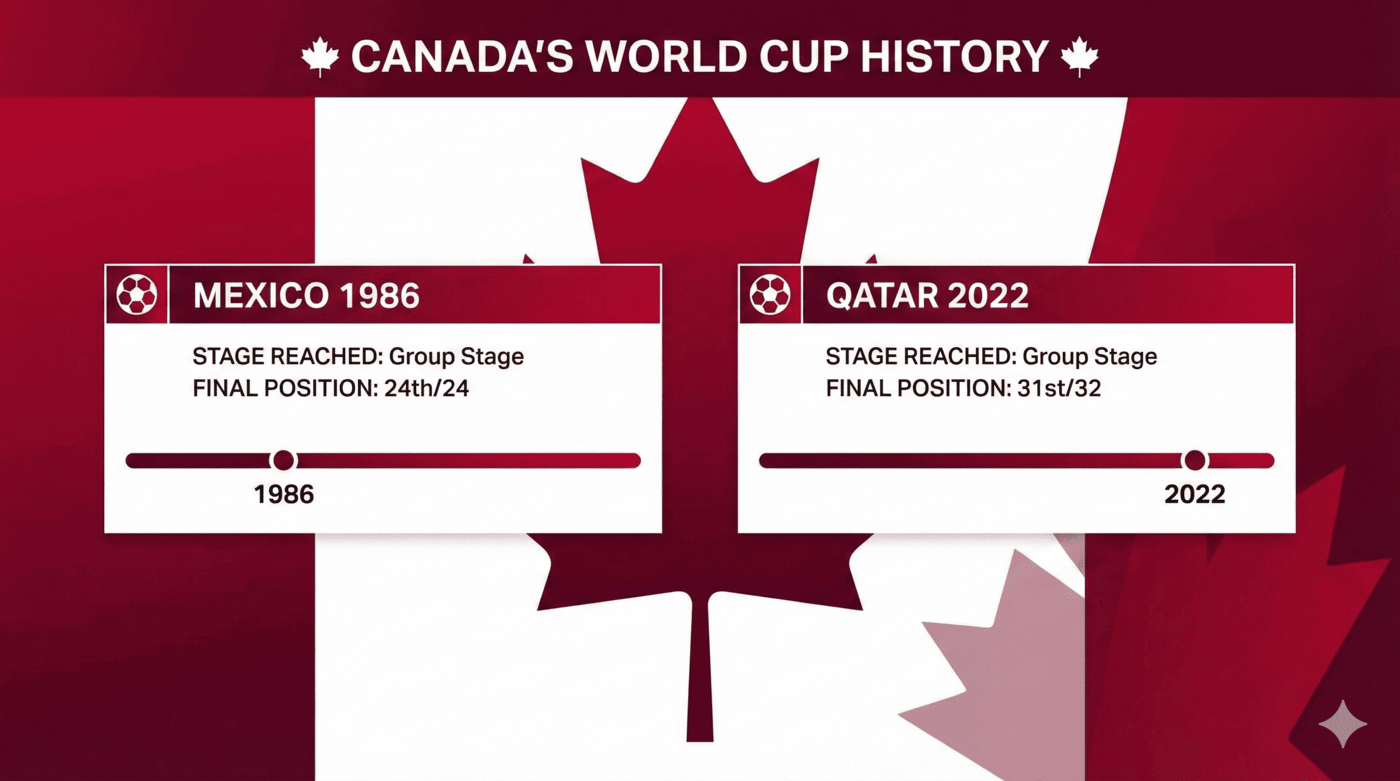
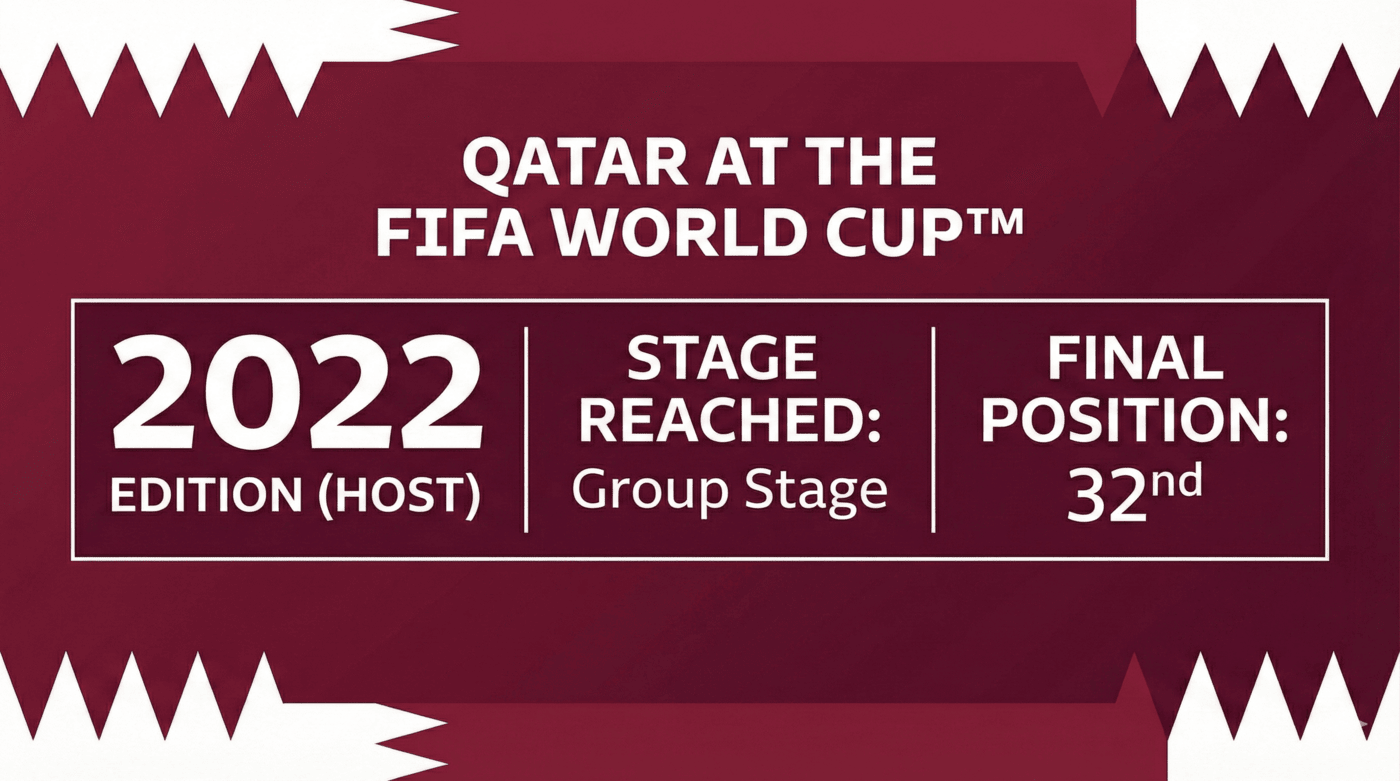
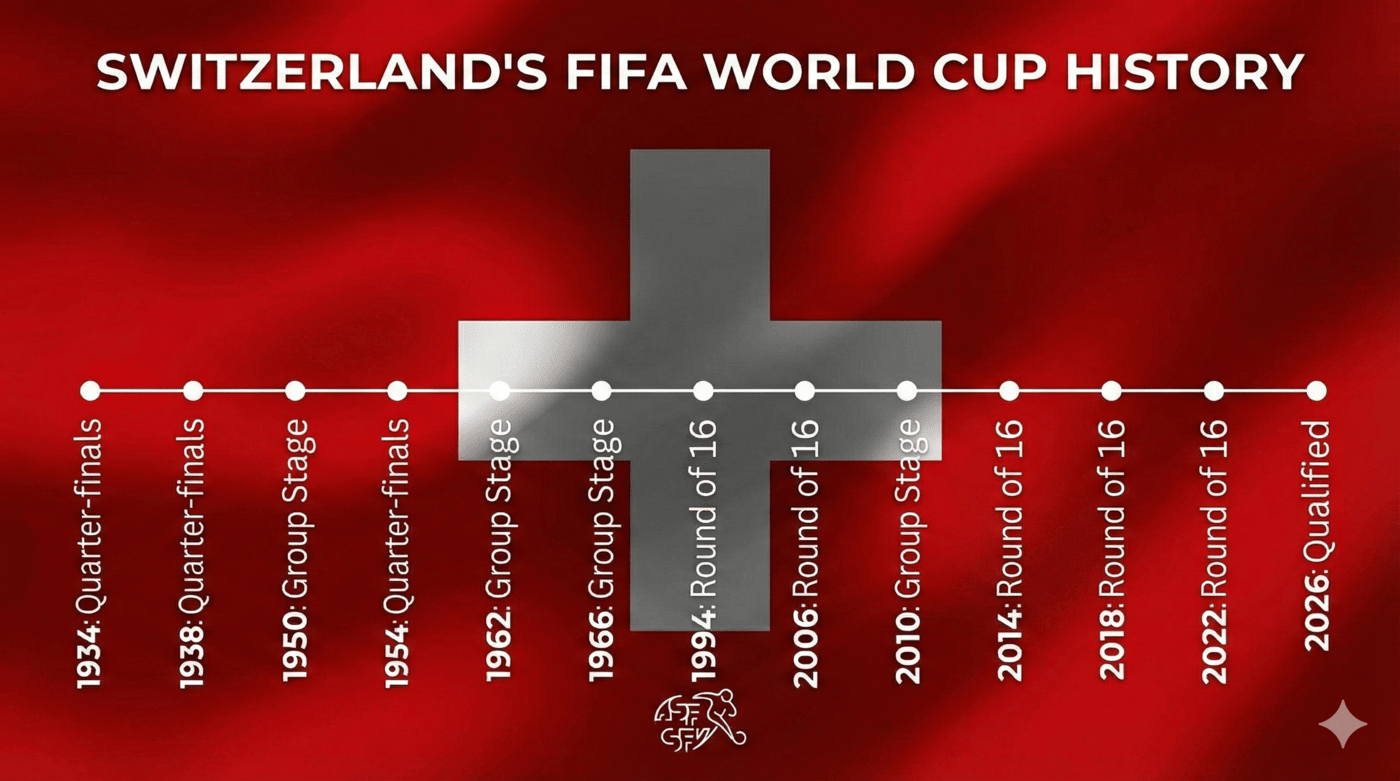
Bosnia and Herzegovina landed in Group B and will face Canada, Switzerland and Qatar. The order of the fixtures matters. The opening match is against Canada on 12 June 2026 in Toronto. The second comes against Switzerland on 18 June 2026 in Los Angeles. The third is against Qatar on 24 June 2026 in Seattle. It is a sequence with a clear narrative arc: first the emotional jump into the tournament, then the likely control test in the middle match, and finally a closing game that could carry qualification pressure.

The first match against Canada has the shape of a difficult entrance. Opening games often carry more tension than flow, and Bosnia and Herzegovina’s qualifying profile suggests it is comfortable in tighter contests. That could help. The task will be to enter the tournament without gifting momentum, especially because this team showed in qualifying that it can operate inside one-goal matches and survive long stretches without panic. Plain-language forecast: draw.

The second match against Switzerland feels like the most tactically demanding one in the group phase, even without leaning on external assumptions about the rival. From Bosnia and Herzegovina’s side, the key issue is obvious: this is the kind of game where conceding first could force it away from its preferred rhythm. In qualifying, the team looked more convincing when games stayed under control and less comfortable when the margin narrowed against stronger opposition. Plain-language forecast: Switzerland win.

The third match against Qatar may become the hinge of the whole group campaign. Bosnia and Herzegovina’s numbers suggest it is well equipped for matches where it must stay patient, avoid opening too much space and trust that one or two moments will appear. If the group arrives at its final round with qualification still in play, this is the sort of match in which composure matters more than spectacle. Plain-language forecast: Bosnia and Herzegovina win.

There is another reason the fixture list matters: Bosnia and Herzegovina’s best qualification work came when it managed emotional transitions well. It opened well after March pressure, recovered from setbacks, and reached playoff penalties without breaking. In a short tournament, that trait can be worth almost as much as pure attacking power. Group football rewards teams that can absorb context from one round to the next. Bosnia and Herzegovina has shown that capacity across this cycle.

The likely shape of the group, from Bosnia and Herzegovina’s perspective, is straightforward. It may need to keep the first match alive deep into the second half, avoid a damaging defeat in the second, and arrive at the third with everything in reach. Goal difference could matter, so the disciplined defensive base from qualifying cannot disappear. This is not a group that invites theatrical promises. It invites practical ambitions.

Date Stadium City Opponent
12 June 2026 National Stadium of Canada Toronto Canada
18 June 2026 SoFi Stadium Los Angeles Switzerland
24 June 2026 Lumen Field Seattle Qatar

The classification keys for Bosnia and Herzegovina look like this:

  • Avoid chasing games too early; its best football in qualifying came when matches stayed compact.
  • Protect the defensive line of the campaign that allowed only 7 goals in 8 group qualifiers.
  • Find support around Džeko and the main scorers so that the attack does not become too predictable.
  • Turn the third group match into a live qualification night rather than an exercise in damage control.
  • Reproduce the mental calm shown in knockout pressure and penalty situations.

Opinión editorial

Bosnia and Herzegovina arrive with a profile that can bother opponents more than casual first impressions might suggest. This is not a flamboyant qualifier, nor one built on grand statistical dominance. It is a side that learned to survive the small details of a campaign: the away opener in Romania, the late bitterness in Cyprus, the rebound against Romania in November, the playoff tension that pushed everything toward the edge. Teams like this can look ordinary from afar and feel deeply inconvenient on the field.

The warning sign, though, is equally concrete. The 2-1 home defeat to Austria on 9 September 2025 remains the clearest reminder of the ceiling question. Against a rival able to match quality with control, Bosnia and Herzegovina can be forced into a less comfortable chase. That is the tournament challenge in one image: stay compact long enough for the match to become yours, not the opponent’s. If it does that, Group B can remain open until the final round. If it loses emotional order the way it did in the late stages at Cyprus, the margin for rescue shrinks very fast.