



Uruguay - Grupo H
đșđŸ Uruguay, the hard-earned ticket and a group that demands craft âïžđïž
A qualifying run built on authority at home, stubborn draws away, and just enough punch to arrive with a clear identity.
Introduction
There are national teams that qualify by cruising, and others that qualify by collecting proof. Uruguayâs route felt like the second: stamped with heavy nights at the Stadium Centenario, a few long silences in hostile air, and just enough late goals to keep the story moving forward. It was not a straight line. It was a rope bridge: steady feet, occasional wobble, and a clear sense that the fall never truly came.
The first images of this campaign still carry that Montevideo lighting. Chile arrived, Uruguay struck three times, and the ball kept finding runners with conviction: NicolĂĄs de la Cruz twice, Federico Valverde once. Later, Brazil came to the Centenario and left with a clean 2â0 lesson. And then, the real signature: Argentina at La Bombonera, Uruguay winning 2â0, a result that doesnât just add pointsâit alters the psychological map of the table.
When the numbers land, they speak with the calm of a team that did the job. Uruguay finished 4th in the CONMEBOL league with 28 points in 18 matches, scoring 22 and conceding 12 for a +10 goal difference. The record reads 7 wins, 7 draws, 4 losses. That draw column is not decoration; it is a defining feature of the journey, the part that shaped the tone and forced Uruguay to learn how to live inside tight margins.
Three hinge moments frame the arc with clarity. On 17 October 2023, Uruguay beat Brazil 2â0 in Montevideo, a statement that made the campaign feel bigger than a run of fixtures. On 16 November 2023, Uruguay won 2â0 away to Argentina, a result that turned ambition into something measurable. And on 5 June 2025, the 0â2 loss in AsunciĂłn against Paraguay served as a warning: in this league, even a strong team can be pinned down, stripped of rhythm, and punished.
This Uruguay did not qualify by being perfect. It qualified by being hard to move. When the finishing was sharp, it looked dangerous; when the finishing dried up, it still remained difficult to beat. That combinationâteeth when the moment arrived, steel when it didnâtâdefines the feeling of this ticket.
The Road Through Qualifiers
CONMEBOL qualification for the FIFA World Cup 26 was played as a single 10-team league, with each team facing every other team home and away. The top six teams qualified directly for the World Cup, while the team finishing 7th moved into the FIFA Play-Off Tournament. In other words: there was margin, but not comfort. You still had to earn your place over 18 games, across altitude, heat, pressure, and the short patience of a continent that punishes hesitation.
Uruguayâs final positionâ4th with 28 pointsâtells a story of stability more than dominance. The points line is crowded: Colombia also finished on 28, Brazil finished on 28, Paraguay finished on 28. The separating detail is goal difference and defensive control. Uruguayâs +10 goal difference matches Colombiaâs +10, and it sits well above Brazilâs +7 and Paraguayâs +4. In a league where draws can either be a safety net or a trap, Uruguay used them mostly as oxygen: a way to keep moving without handing the table to rivals.
The home record, by the raw results, reads like the backbone. Uruguay beat Chile 3â1, beat Brazil 2â0, beat Bolivia 3â0, beat Colombia 3â2, beat Venezuela 2â0, beat Peru 3â0. Even when it didnât score, it didnât collapse: 0â0 at home against Paraguay, 0â0 at home against Ecuador. The Centenario was not always loud in goals, but it was consistently a place where opponents struggled to breathe.
Away from Montevideo, the campaign leaned into patience and damage control. There were strong hitsâ2â0 at Argentina, 1â1 at Brazil, 2â2 at Colombiaâbut also long stretches where the scoreline stayed locked: 0â0 at Venezuela, 0â0 at Bolivia, 0â0 at Chile. The price of that approach showed in two key defeats: 1â2 at Ecuador and 0â2 at Paraguay, plus the late 0â1 loss at Peru. Uruguay did not crumble often, but when it did, it tended to be on the road and by slim marginsâone or two decisive episodes.
The campaign also has a rhythm break that matters for performance reading. Early on, Uruguayâs attack looked open and confident: 3â1 to start, 2â2 away in Barranquilla, 2â0 versus Brazil, 2â0 away to Argentina, 3â0 versus Bolivia. Then came a stretch where the goals dried up: four consecutive 0â0 draws across two windowsâParaguay at home, Venezuela away, Ecuador at homeâplus the 0â1 loss in Lima. That is not just âbad finishingâ; it is a period where games became narrower, less fluid, and decided by single moments or not decided at all.
Then, Uruguay found its scoring pulse again at home. The 3â2 win over Colombia in Montevideo was chaos and control in the same 90 minutes, including a goal at 90+11' by Ugarte that changed a draw into a win. The 2â0 versus Venezuela and 3â0 versus Peru later in the run reinforced the idea that this team, when it imposes tempo in familiar conditions, can translate pressure into goals rather than just territory.
Below is the complete match log for Uruguay, as played in this CONMEBOL qualifying league.
| Date | Matchday | Opponent | Venue | Result | Scorers | Stadium |
|---|---|---|---|---|---|---|
| 8 September 2023 | 1 | Chile | Home | Uruguay 3â1 Chile | N. de la Cruz 38', 71', Valverde 45+2'; Vidal 74' | Stadium Centenario, Montevideo |
| 12 September 2023 | 2 | Ecuador | Away | Ecuador 2â1 Uruguay | Torres 45+5', 61'; Canobbio 38' | Stadium Rodrigo Paz Delgado, Quito |
| 12 October 2023 | 3 | Colombia | Away | Colombia 2â2 Uruguay | RodrĂguez 35', Uribe 52'; M. Olivera 47', NĂșñez 90+1' pen. | Stadium Metropolitano, Barranquilla |
| 17 October 2023 | 4 | Brazil | Home | Uruguay 2â0 Brazil | NĂșñez 42', N. de la Cruz 77' | Stadium Centenario, Montevideo |
| 16 November 2023 | 5 | Argentina | Away | Argentina 0â2 Uruguay | R. AraĂșjo 41', NĂșñez 87' | La Bombonera, Buenos Aires |
| 21 November 2023 | 6 | Bolivia | Home | Uruguay 3â0 Bolivia | NĂșñez 15', 71', VillamĂl OG 39' | Stadium Centenario, Montevideo |
| 6 September 2024 | 7 | Paraguay | Home | Uruguay 0â0 Paraguay | Stadium Centenario, Montevideo | |
| 10 September 2024 | 8 | Venezuela | Away | Venezuela 0â0 Uruguay | Stadium Monumental, MaturĂn | |
| 11 October 2024 | 9 | Peru | Away | Peru 1â0 Uruguay | Araujo 88' | Stadium Nacional, Lima |
| 15 October 2024 | 10 | Ecuador | Home | Uruguay 0â0 Ecuador | Stadium Centenario, Montevideo | |
| 15 November 2024 | 11 | Colombia | Home | Uruguay 3â2 Colombia | D. SĂĄnchez OG 57', Aguirre 60', Ugarte 90+11'; Quintero 31', GĂłmez 90+6' | Stadium Centenario, Montevideo |
| 19 November 2024 | 12 | Brazil | Away | Brazil 1â1 Uruguay | Gerson 62'; Valverde 55' | Arena Fonte Nova, Salvador |
| 21 March 2025 | 13 | Argentina | Home | Uruguay 0â1 Argentina | Almada 68' | Stadium Centenario, Montevideo |
| 25 March 2025 | 14 | Bolivia | Away | Bolivia 0â0 Uruguay | Stadium Municipal, El Alto | |
| 5 June 2025 | 15 | Paraguay | Away | Paraguay 2â0 Uruguay | Galarza 13', Enciso 81' pen. | Stadium Defensores del Chaco, AsunciĂłn |
| 10 June 2025 | 16 | Venezuela | Home | Uruguay 2â0 Venezuela | Aguirre 42', De Arrascaeta 47' | Stadium Centenario, Montevideo |
| 4 September 2025 | 17 | Peru | Home | Uruguay 3â0 Peru | Aguirre 14', G. de Arrascaeta 56', Viñas 80' | Stadium Centenario, Montevideo |
| 9 September 2025 | 18 | Chile | Away | Chile 0â0 Uruguay | Stadium Nacional, Santiago |
Now, the complete final standings table as provided. This is a single-table league, so it is the relevant table for Uruguayâs qualification.
Table of positions
| Pos | Team | Pts | MP | W | D | L | GF | GA | GD |
|---|---|---|---|---|---|---|---|---|---|
| 1 | Argentina | 38 | 18 | 12 | 2 | 4 | 31 | 10 | 21 |
| 2 | Ecuador | 29 | 18 | 8 | 8 | 2 | 14 | 5 | 9 |
| 3 | Colombia | 28 | 18 | 7 | 7 | 4 | 28 | 18 | 10 |
| 4 | Uruguay | 28 | 18 | 7 | 7 | 4 | 22 | 12 | 10 |
| 5 | Brazil | 28 | 18 | 8 | 4 | 6 | 24 | 17 | 7 |
| 6 | Paraguay | 28 | 18 | 7 | 7 | 4 | 14 | 10 | 4 |
| 7 | Bolivia | 20 | 18 | 6 | 2 | 10 | 17 | 35 | -18 |
| 8 | Venezuela | 18 | 18 | 4 | 6 | 8 | 18 | 28 | -10 |
| 9 | Peru | 12 | 18 | 2 | 6 | 10 | 6 | 21 | -15 |
| 10 | Chile | 11 | 18 | 2 | 5 | 11 | 9 | 27 | -18 |
Two things stand out when you read Uruguay inside this table rather than in isolation. First: the defensive number. Conceding 12 in 18 games is a title-level defensive pace, and it explains why a team with seven draws still finishes comfortably inside the top group. Second: the competitiveness of the middle. Uruguay did not qualify in a private lane; it qualified inside a four-team knot on 28 points, where every clean sheet and every late goal mattered.
If you segment the results by home and away through the match list, Uruguayâs profile becomes even clearer. At home, the team stacked wins and clean sheets: 6 wins, 2 draws, 1 loss, with several matches decided by two or three goals. Away, the team leaned into control and restraint: 1 win, 5 draws, 3 losses, including four 0â0s. That is not merely a stylistic note; it is the competitive logic of Uruguayâs campaign. The away draw is not a flaw by itself. The question is what it becomes against elite opponents in a tournament group where a single goal can flip a table.
Finally, the one-goal games deserve attention because they often reveal the teamâs emotional temperature. Uruguay lost 0â1 at Peru and 0â1 at home to Argentina; it won 2â0 at Argentina and 2â0 versus Brazil; it drew 1â1 at Brazil; it drew 2â2 at Colombia. Even the 3â2 win over Colombia was decided by one goal at the last breath. Uruguay lived in thin air and rarely panicked. The campaignâs message is simple: if you want to beat this team, you probably need to be more clinical than you are used to being.
How they play
From the evidence of results and goal patterns, Uruguayâs identity in this cycle is built on two pillars: defensive control and selective acceleration. The numbers provide the first pillar: 12 conceded in 18 matches, with multiple clean sheetsâ0â0 versus Paraguay, Venezuela, Ecuador, Bolivia, Chile; 2â0 versus Brazil; 3â0 versus Bolivia; 2â0 versus Venezuela; 3â0 versus Peru. Uruguay didnât just âdefend wellâ in isolated matches; it repeated the same outcome type across different opponents and venues.
The second pillarâaccelerationâshows up in how Uruguay scores when it does. The 3â1 versus Chile came with midfield arrivals (De la Cruz, Valverde) and a quick punch before halftime. The 2â0 versus Brazil blended a first-half strike (NĂșñez 42') with a later confirmation (De la Cruz 77'). The 2â0 at Argentina was built on timing: AraĂșjo 41', NĂșñez 87', a goal before halftime to change the mood and a goal late to close the door. Uruguay, across these matches, looks like a team that does not need constant attacking waves; it needs windows.
But this approach has a cost when the windows donât open. There was a clear scoring drought cluster: 0â0 Paraguay, 0â0 Venezuela, 0â0 Ecuador, plus the 0â1 at Peru. That four-game stretch included three matches without scoring at the Centenario and one away defeat settled by a late goal. In performance terms, it suggests that when the opponent denies transitions and forces Uruguay to break them down in smaller spaces, Uruguay can become patient to the point of bluntness. The control remains, but the edge disappears.
The distribution of goals in the match list points to a team where key attackers carry weight, but not in a one-man monopoly. Darwin NĂșñez appears repeatedly as a decisive scorer: goals against Colombia away, Brazil at home, Argentina away, Bolivia at home. De la Cruz is central in the opening win and the Brazil statement. Valverde pops up in big scenes: a goal versus Chile, a goal away at Brazil. Meanwhile, the campaign also includes important contributions from others: Canobbio scored in Quito; Aguirre scored versus Colombia, Venezuela, and Peru; De Arrascaeta scored versus Venezuela and Peru; Viñas scored versus Peru. Uruguayâs goal scoring is not evenly spread, but it is varied enough to avoid total dependence on a single trigger.
The vulnerability, as the results suggest, is not defensive fragility but offensive scarcity under certain conditions. Uruguayâs losses were often matches of few goals: 1â2 at Ecuador, 0â1 at Peru, 0â1 at home to Argentina, 0â2 at Paraguay. The common thread is not a collapse; it is a match that drifts into a narrow channel where one mistake, one set piece, one penalty, or one late strike becomes fatal. Uruguay can survive in that channelâdraws prove itâbut to win consistently in tournament football, it has to convert at least one of those tight games into a 1â0 in its favor.
That is why the late moments of the campaign matter. Ugarteâs 90+11' winner against Colombia is not just a dramatic detail; it is evidence of persistence and emotional stamina. Uruguay did not always look fluent, but it kept pushing until the match tipped. In a World Cup group where one win often does the heavy lifting, that ability to stay alive until the last minutes can become a competitive advantage.
The Group at the World Cup
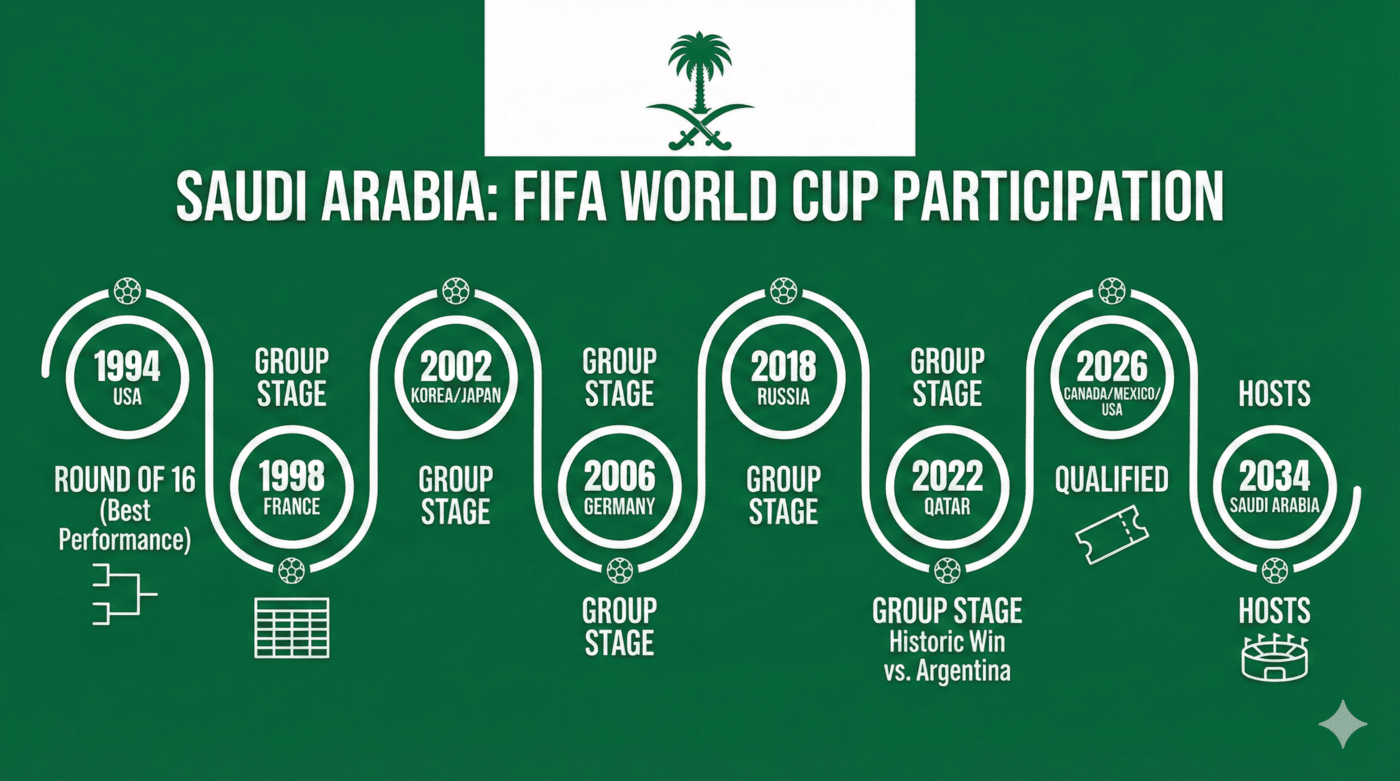
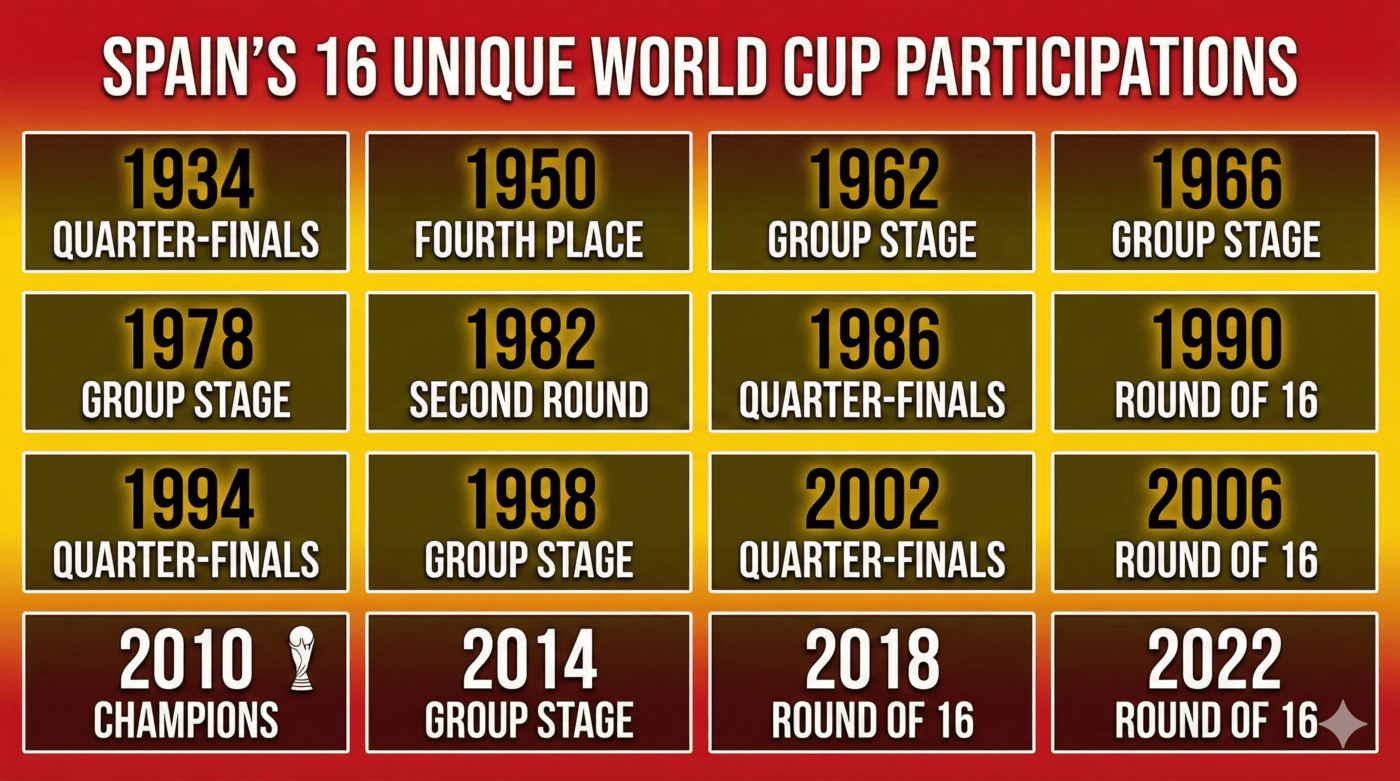
Uruguay lands in Group H with a clear itinerary and a very specific geography: two matches at Hard Rock Stadium in Miami, then a third at Stadium Chivas in Guadalajara. The group opponents listed are Saudi Arabia, Cabo Verde, and Spain. It is a blend that promises different match textures: a match to manage, a match to impose, and a match to measure yourself.
Here is the complete group-stage schedule for Uruguay as provided.
| Date | Stadium | City | Opponent |
|---|---|---|---|
| 15 June 2026 | Hard Rock Stadium | Miami | Saudi Arabia |
| 21 June 2026 | Hard Rock Stadium | Miami | Cabo Verde |
| 26 June 2026 | Stadium Chivas | Guadalajara | Spain |
The opening match against Saudi Arabia sets the emotional tone. Opening games tend to be a negotiation with nerves: teams do not want to lose the tournament in 20 minutes, so they often choose safety first. Uruguayâs qualifying profile suggests it is comfortable in that spaceâtight matches, risk control, and a willingness to keep a clean sheet as a base. The likely script is a measured first half, Uruguay trying to win territory without overexposing itself, and then picking momentsâthrough a run, a second ball, a set piece, or a late surgeâto create the decisive chance.
PronĂłstico: gana Uruguay.
The second match, against Cabo Verde, reads like the one where Uruguay must translate control into points with authority. Not necessarily a wide-open game, but a match where the responsibility sits on Uruguayâs shoulders: to set the tempo, to avoid frustration, and to avoid giving the opponent a single cheap episode that changes everything. In qualifying, Uruguay showed it can dominate at home and still finish 0â0 when the final punch is missing. That is the warning here: imposing conditions is not the same as scoring. Uruguayâs task is to turn sustained pressure into at least one clean, clear finish.
PronĂłstico: gana Uruguay.
The third match against Spain is the groupâs measuring stick. If Uruguay arrives with points in the pocket, this game becomes a test of maturity: can Uruguay defend without becoming passive, can it compete for the ball without losing its vertical threat, can it accept long phases without panic. Uruguayâs results against Brazil and Argentina show it can produce elite nights: 2â0 versus Brazil, 2â0 away to Argentina, 1â1 away to Brazil. Those are not friendly numbers; they are competitive proof that Uruguay can handle a heavyweight and still write its own plot.
At the same time, the games where Uruguay struggled to scoreâ0â0s and 0â1 lossesâunderline the key danger against an opponent that can keep you away from goal for long stretches. Uruguay cannot rely purely on patience; it needs at least one attacking sequence that ends with a real shot, not just a corner. The match may become a chessboard of transitions: Uruguay looking for the moment to run, Spain looking to control the pace. In that type of game, Uruguayâs defensive numbers are a reason to believe it can stay close until late.
PronĂłstico: empate.
The group, overall, asks Uruguay for balance more than brilliance. Uruguay has already shown it can win big games and survive tricky ones. The question is whether it can do both inside the same week, with the tournamentâs pressure compressing time and space.
Keys to qualify from Group H
- Build from the clean sheet: Uruguay conceded 12 in 18 qualifiers, and that defensive base can travel.
- Turn one tight match into a 1â0: too many scoreless draws in qualifying show what happens when control lacks bite.
- Start sharp: in several wins, Uruguay scored before halftime, changing the opponentâs risk profile.
- Manage the second gameâs responsibility: imposing conditions must be paired with clear finishing, not only territory.
- Keep emotional stamina for late moments: the Colombia 3â2 win decided at 90+11' is a reminder that persistence can be a weapon.
Editorial opinion
Uruguay qualified like a team that knows the true currency of South American football: not spectacle, but control. The table confirms itâ22 scored, 12 conceded, and a goal difference that stands tall inside a four-team tie on 28 points. There is a seriousness in those numbers, a sense that this side rarely gifts anything. In tournament football, that is not a minor detail; it is often the foundation of the entire campaign.
The warning is also written in the same ink. Seven draws are not a badge by themselves; they are a style choice that becomes dangerous if the attack goes silent again. Uruguay canât afford a stretch like the run of 0â0s against Paraguay, Venezuela, and Ecuador, followed by a 0â1 in Lima, because a World Cup group doesnât offer that much time to wait for the next window. The decisive goal has to show up on schedule.
If there is one concrete cautionary tale inside this qualifying file, it is the 0â2 loss in AsunciĂłn on 5 June 2025. Not because it was a collapse, but because it shows how a match can tilt away when Uruguay fails to control the critical moments: an early concession, then the late penalty, and suddenly the plan is gone. Uruguayâs ceiling is highâBrazil and Argentina already felt it. But the group stage, as always, punishes the team that believes control alone is enough. The next step is simple to describe and hard to execute: keep the same defensive backbone, and add one more decisive finishing moment per match.